


Ecuador Declares National Emergency Amidst Heavy Rains
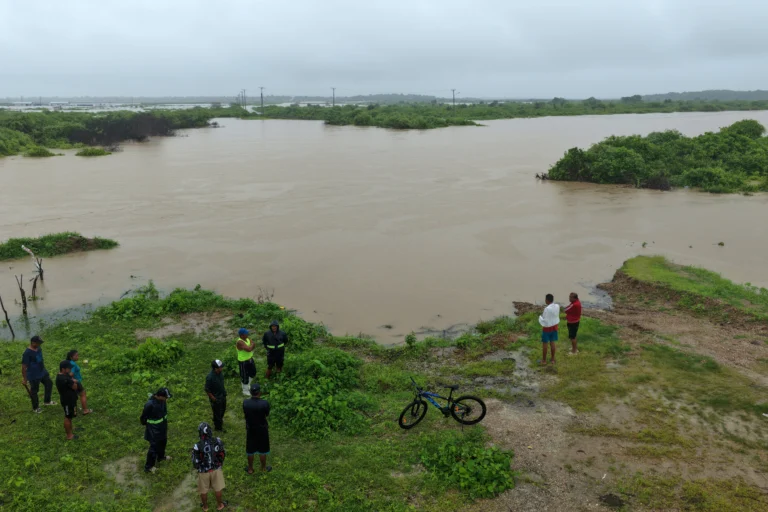
The Ecuadorian Government mobilizes emergency resources to care for coastal and mountain populations after critical infrastructure collapsed due to rainfall. Photo: EFE.
March 13, 2026 Hour: 5:30 pm
🔗 Comparte este artículo
The Ecuador’s national Government reports eleven dead and more than 46,000 people affected by heavy rainfall since the beginning of the year.
Ecuador declared a 60-day national emergency due to intense rainfall, which has resulted in 11 fatalities and impacted over 46,000 people since January.
The measure, taken on March 13, aims to address the severe damage to infrastructure and provide immediate humanitarian assistance across the affected regions.
RELATED: Ecuadorian Judge Upholds Suspension of the Citizen Revolution Movement
The Government of Ecuador, through the National Secretariat of Risk Management, has declared a 60-day national emergency to confront the devastating effects of the ongoing rainy season. This critical measure was implemented following an assessment of the extensive impact on the population, the road network, and crucial strategic infrastructure throughout the country.
The declaration enables the immediate activation of all state entities, prioritizing humanitarian assistance and the evacuation of families residing in high-risk zones.
Since the beginning of January, the relentless weather system has tragically claimed the lives of 11 individuals and directly affected more than 46,000 citizens.
The humanitarian toll is significant, with communities grappling with widespread inundations and the destruction of essential services.
Official reports indicate that 82 homes have collapsed and 19 bridges have been destroyed, severely disrupting transportation and connectivity for thousands. The National Secretariat of Risk Management has documented 1,662 adverse emergencies, impacting 190 municipalities and hundreds of parishes across the nation, underscoring the broad geographical reach of the disaster.
The coastal provinces of Esmeraldas, Los Rios, and Guayas are currently under red alert, signifying the highest level of emergency preparedness due to the magnitude of the floods. Among these, the province of Guayas has borne the brunt of the crisis, reporting nearly 20,000 people affected by the rising waters. In response to the escalating situation, the Ecuadorian Chancellery has been tasked with coordinating mechanisms for international cooperation, seeking to bolster the state’s capacity to respond effectively to the widespread needs.
The National Institute of Meteorology and Hydrology has scientifically linked this severe climatic scenario to a pronounced increase in sea temperature within the Niño 1+2 region. This particular area, situated in the eastern Pacific Ocean, is experiencing warming conditions that are highly conducive to the persistence of intense rainfall along Ecuador’s coast and the oceanic areas adjacent to the Galapagos Islands.
This meteorological phenomenon contributes to the prolonged and heavy downpours, exacerbating the already critical situation for communities unprepared for such sustained intensity.
Ecuadornian local governments have been specifically instructed to prioritize the establishment and improvement of early warning systems to mitigate future risks and to accelerate the repair of the 35 kilometers of roads that have been rendered impassable. With heavy precipitation expected to continue over the coming days, the National Emergency Operations Committee will maintain permanent sessions to vigilantly monitor the evolution of the phenomenon and coordinate ongoing response efforts.
The long-term recovery will require sustained national and potentially international support to rebuild affected areas and strengthen resilience against future climatic events.
Author: Laura V. Mor
Source: Agencies